
About
As Taos County moves towards a new Economic Development planning process in 2026, and to ensure inclusive community engagement, and equitable resource distribution and development going forward, Taos County sought capacity to conduct a Cultural and Outdoor Asset Mapping Study, now called the Cultural Treasures Project (CTP). This study will identify tangible assets such as venues, vacant facilities, trails, waterways underutilized resources, and community centers that support the outdoor and creative economies. The study will also aim to identify places that are valuable intangible assets: those that hold historical meaning and memory, and are considered cultural treasures for which we do not want to lose to development. Taos County is at risk of being “loved to death” by our tourism economy. There is an urgency to safeguard the lifeways that have existed here for centuries, while understanding that growth and development are inevitable. This research-informed approach will give us an opportunity to make mindful decisions, combat gentrification, and move with intentionality.
Taos County is acutely aware of the pivotal moment we find ourselves in. It offers us the choice to preserve and safeguard our collective, diverse heritage or risk losing it. Common across age, race, ethnicity, geography, and sector is a deep love for this place, and a collective vision to responsibly manage growth, tourism, and development while honoring and strengthening creative, cultural, and artistic life. We cannot steward that which we have not identified. The CTP is a direct response.
We cannot steward that which we have not identified.
HOW DO WE DEFINE CULTURAL ASSETS?
English
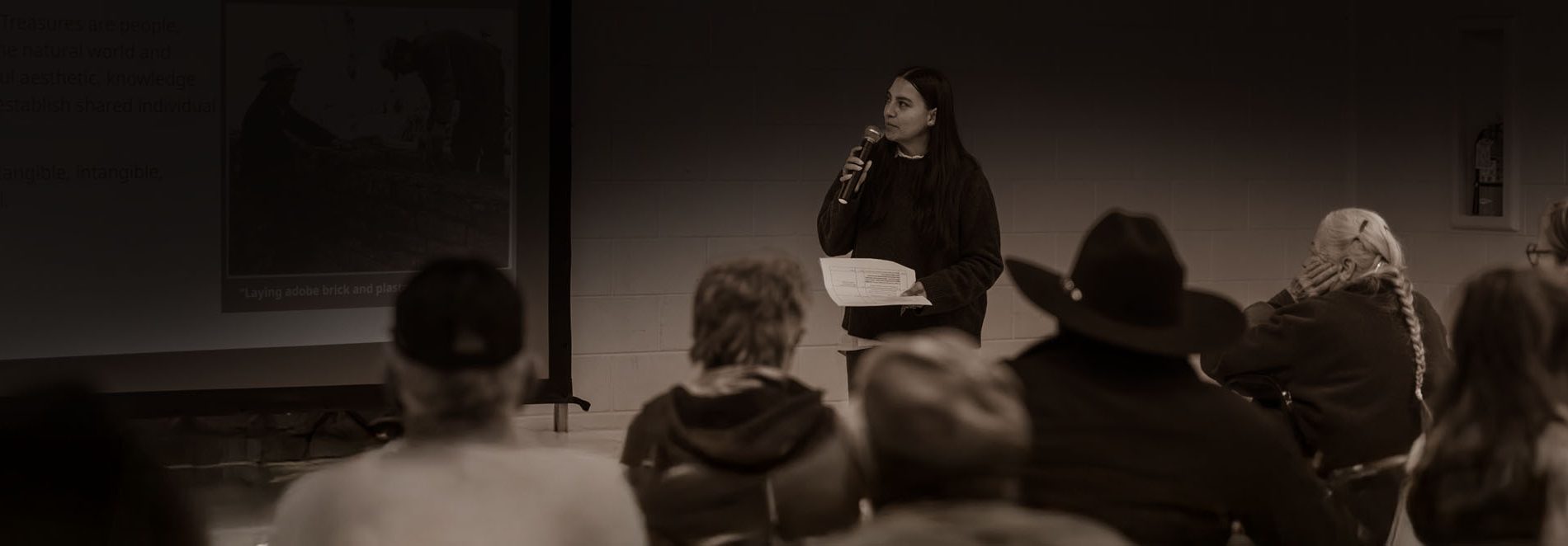
Cultural Assets or Cultural Treasures are people, groups, customs, places, the natural world and events that hold meaningful aesthetic, knowledge and/or historic value that establish shared individual and community identity.
Cultural Treasures can be tangible, intangible, emotional, and/or spiritual.
Español
Los Recursos Culturales o Tesoros Culturales son personas, grupos, costumbres, lugares, el mundo natural y eventos que tienen un valor estético, sabiduría y/o histórico significativo que ayuda a establecer la identidad individual y de la comunidad.
Los Tesoros Culturales pueden ser tangible, intangible, emocionales y/o espirituales.
OUTCOMES
Over time, this work will shift the nature of economic development in our rural community to one that balances the reality of externally-driven development interests and locally-led culturally-relevant, environmental, and sustainable growth. This multi-year project aims to strengthen the community fabric of Taos County, preserve its rich cultural and natural resources, and ensure sustainable and equitable growth for future generations. Our project objectives include:
- Asset Identification: Identify and map (with community consent) cultural and outdoor assets, including trails, parks, acequias, natural resources, facilities, cultural venues, libraries, stories, lost places that hold value, language, cultural practices, art forms, and anything that one might deem appropriate under the definition above.
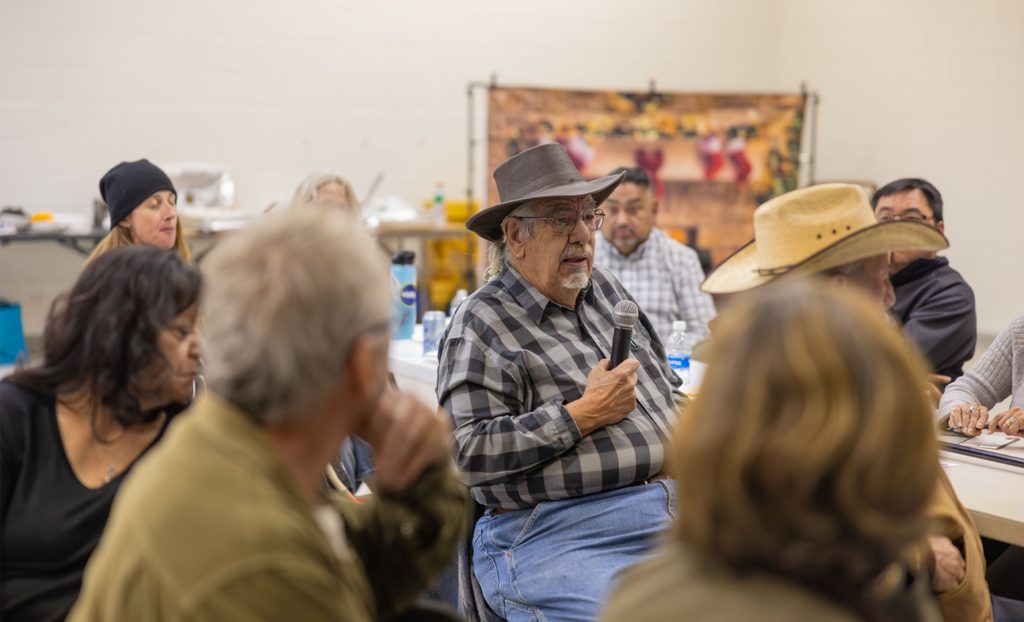
- Community Engagement: Conduct participatory mapping and storytelling sessions to document intangible cultural assets, such as local heritage, traditions, and land-based lifeways. Engage Taos County residents in a process that centers them, their stories, memories, and the things they value.
- Sustainable Development: Create policies and educational tools to guide responsible and stewardship-based tourism and growth, safeguarding Taos County’s unique cultural and natural heritage. Inform economic development, comprehensive, and land-use planning and practices to protect that which makes Taos County unique.
- Public Accessibility: Develop a comprehensive, publicly accessible database and mapping tool to share the fi ndings with community members and visitors. Provide information for education, planning, programming, interpretive, policy, or land use opportunities.
- Economic Recovery: Formulate economic development recommendations rooted in equitable practices to support Taos County’s recovery and resilience post-COVID-19.
Economic Recovery Corps

Taos County is among 65 host sites selected as part of the inaugural Economic Recovery Corps to receive help in advancing a project critical to the economic recovery of our community. We are the only community in New Mexico to be selected. ERC projects represent the interconnectedness between economic development and the pressing needs in communities of all sizes, including workforce development, entrepreneurial ecosystem building, housing, childcare, climate resiliency, broadband, and access to capital. Each project across the U.S. receives a dedicated fellow (fully funded for 2.5 years from the ERC program) who serves as a field catalyst to enhance, strengthen, and coordinate relationships and local efforts alongside the host community. We are delighted to be matched with local Taoseña Contessa Trujillo, who brings a wealth of expertise and passion to help us and local stakeholders on a Cultural & Outdoor Asset Mapping Study for Equitable Development for the next 2.5 years. Building off her work with the Paseo Project, the Destination Stewardship Plan, and her deep roots in this community, Contessa is the ideal candidate to create a rich and broad asset identification study of the outdoor, artistic and cultural treasures throughout Taos County.
View all 65 Host Community Projects and Meet the Fellows >
The Economic Recovery Corps (ERC) Fellowship program aims to build capacity in economically distressed areas across the U.S. while cultivating the next generation of economic development leaders. The program connects 65 host sites nationwide with diverse practitioners and leaders with the passion, skills, and vision to create new ways of doing economic development. The ERC Fellowship was launched in 2023 through a $30 million cooperative agreement with the U.S. Department of Commerce’s Economic Development Administration (EDA). It is led by the International Economic Development Council and supported by 6 other national economic development organizations.